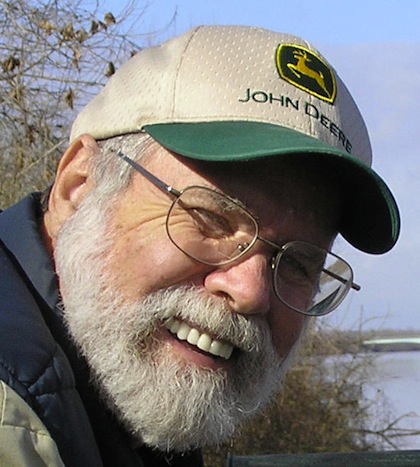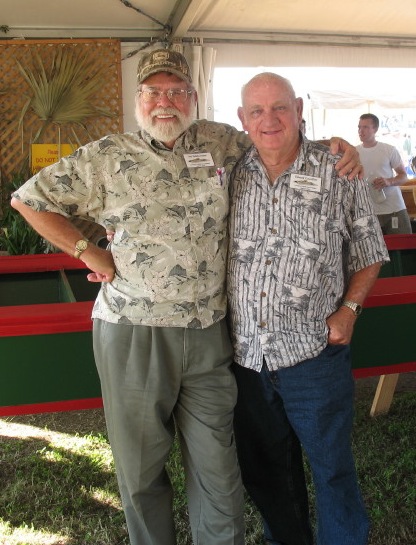


A. James Delahoussaye
Meet our member!
A. James Delahoussaye was born in New Iberia, Louisiana in 1938. He has worked as an environmental scientist, teacher, and commercial fisherman in the Atchafalaya Basin, where he currently resides. Delahoussaye is currently working as an adjunct researcher in the department of Sociology, Anthropology at the University of Louisiana at Lafayette, where he analyzes animal bone from prehistoric Indian middens.
Delahoussaye spent many years working on the ethnology of the Atchafalaya houseboat communities, many of whom he got to know while working and living in the area. His large collection of recordings and related materials from this project was recently gifted to the Library of Congress, where it will be housed in the American Folklife Center.
Delahoussaye described the events that led to his donation:
“The material first came to the attention of Todd Harvey, acquisitions manager for American Folklife Center (AFC) in the spring of 2012. He asked if I could send some examples of the taped interviews to him, which I did. They also asked for a description of the location where the people who were on the tapes lived. It turns out that AFC had nothing in its archives from the Atchafalaya Basin, not even music. After that we just worked out the language for the terms of the gift, copyright, rights retained, etc. and we packed the tapes and sent them. We digitized all the tapes prior to shipment and sent a digitized copy along with the original analog tapes. One feature of the agreement is that LSU and ULL are entitled to a digitized copy of the complete set if desired. My understanding is that processing of the collection at AFC it is still ongoing and it is not ready for full utilization yet. I have transcribed, in detail, about half of the tapes so far (48) and continue to work on that – several thousand pages of transcript. From the transcriptions there are about 25 presentations varying in length from two hours to thirty minutes.”
The location of the catalog entry at LOC/AFC is http://lccn.loc.gov/2013655203.